
International Day of the Disappeared 2026
Connected online and yet still lost: Why people need the Tracing Service
Berlin, 27 August 2026
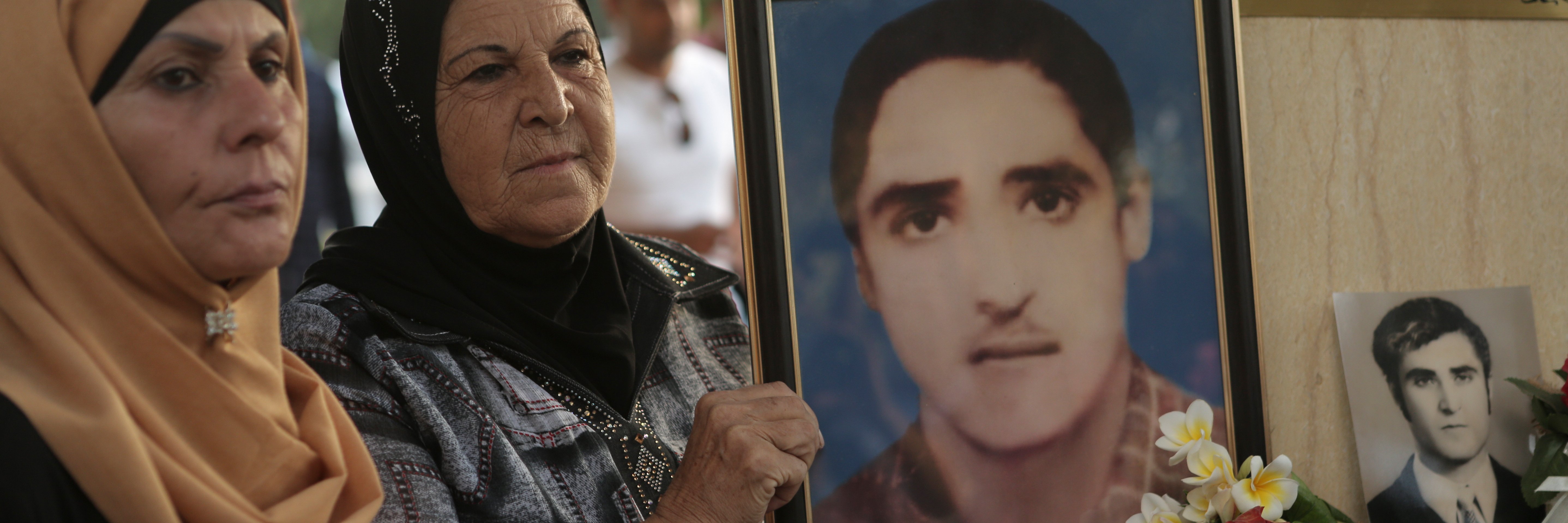
Every day, people all over the world are separated from their loved ones by armed conflicts, disasters, flight, displacement or migration. The German Red Cross (GRC) Tracing Service helps to find relatives, reconnect them and reunite families. Even in an age of digital connectivity, people lose contact with one another and need support in their search. On the occasion of the International Day of the Disappeared on 30 August 2026, GRC Secretary-General Christian Reuter emphasises: “We will continue to do everything in our power to reunite families and provide relatives with certainty about the fate of their missing family members.”
In the area of international tracing, the GRC Tracing Service registered 1,841 new cases of missing relatives last year. In the first half of 2026, 786 missing persons were newly registered. The main countries of origin of those seeking help were Afghanistan, Ukraine, Somalia, Syria and Iraq. This is because people seeking protection from countries affected by crises and armed conflicts often lose contact with their families while fleeing. The work of the GRC Tracing Service remains in demand, as even in the age of social media and the like, relatives often fail to find one another. Frauke Weber, Head of Restoring Family Links Department, cites several reasons for this: “Some people searching for loved ones are too elderly or too young to know how to search via the internet or social media or to make use of these options. Others, whether missing persons or relatives searching for them, are, for example, in prison and have no access to the internet.” Another reason may be that electronic devices and identity documents have been lost while fleeing or have been taken away from them. “This makes it difficult to access their own social media accounts, as security measures such as two-factor authentication cannot initially be used, nor can they access their password manager” says Frauke Weber. In addition, missing persons or relatives searching for them are often in areas without network coverage, for example due to armed conflict, political interference or natural events such as earthquakes.
The work of the GRC Tracing Service is supported by the international tracing service network of the Red Cross and Red Crescent Movement. Particularly with current international tracing requests, data collected for tracing purposes can be exchanged between the 191 National Societies and the Central Tracing Agency of the International Committee of the Red Cross, thus reconnecting family members.
More than 80 years after the end of the Second World War, the GRC Tracing Service, which is supported by the Federal Ministry of the Interior (BMI), also continues to receive thousands of enquiries every year from relatives seeking certainty about the fate of those missing in action. Last year, a total of 7,752 enquiries were received regarding the whereabouts of people missing in action from the Second World War.
Additionally, last year, the GRC Tracing Service conducted 18,155 qualified consultations nationwide on the legal requirements and practical implementation of the ethnic German repatriate admission procedure (Spätaussiedler) and on family reunification for individuals entitled to protection.
Further information on the work of the Tracing Service and online forms for tracing requests are available at: www.drk-suchdienst.de